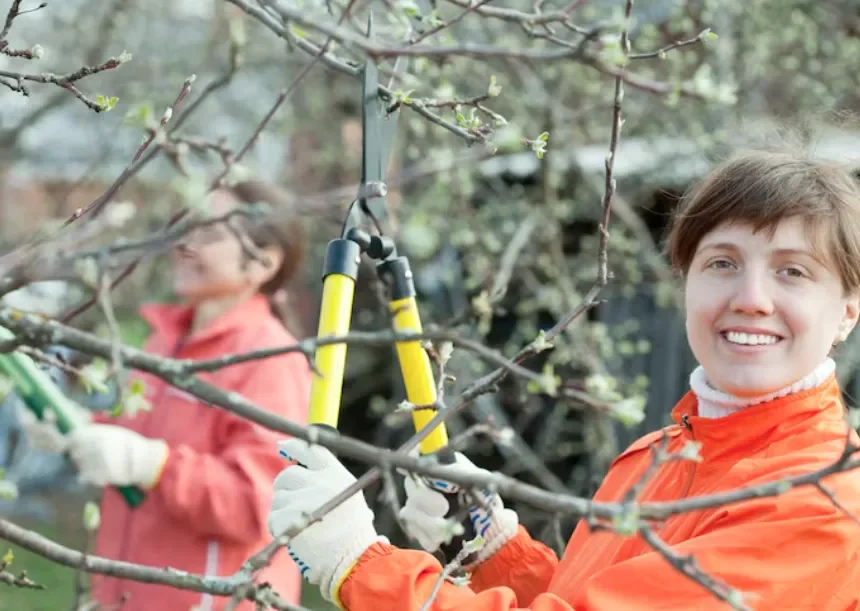
In Princeton, Indiana, mature trees add shade, character, and long-term value to homes, farms, and commercial properties. They can also become a serious concern when dead limbs, weak branch unions, root problems, or storm damage place roofs, driveways, barns, vehicles, and power lines at risk. Tree service providers help Princeton property owners assess tree hazards, maintain healthy canopies, and safely address trees that require more than routine care.
Why Storm Damage Is Rarely About Weather Alone
Storm damage is rarely caused by weather alone. A tree’s condition, root stability, branch structure, pruning history, species, and location all influence how it responds to high winds, heavy rain, ice, and lightning. Taking action before the next storm gives homeowners and landowners more options than waiting until a limb falls across a roofline or a whole tree blocks access to the property.
Princeton sits among open agricultural land, residential neighborhoods, busy roads, and rural properties throughout Gibson County. Trees in exposed yards and field edges may experience greater wind pressure than those protected by nearby buildings or wooded areas. Meanwhile, established neighborhood trees may grow close to houses, garages, sidewalks, fences, and utility corridors, leaving little room for a mistake when a large limb fails.
Seasonal weather can create changing stresses. Extended rainfall may leave soil softer around the roots of a mature tree, while ice can load already weakened branches. Summer heat and dry periods may also expose underlying health issues. These conditions do not mean every large tree is unsafe, but they do make regular observation and professional assessment valuable for trees near important targets.
Ash trees deserve particular attention because pest damage can progress before a homeowner realizes the tree is declining. Property owners who notice thinning leaves, bark changes, branch dieback, or unusual woodpecker activity should review the signs of emerald ash borer in Southwest Indiana and arrange an evaluation before the tree becomes unstable.
Warning Signs to Watch For
A visual check from the ground can help a Princeton property owner decide when to call for help. It is important not to climb the tree, cut elevated limbs, or pull on damaged branches. A tree may appear stable, while hidden decay, internal cracking, or tension in the wood creates a dangerous situation.
Several warning signs deserve a professional evaluation. These include a new or worsening lean, especially toward a house, road, driveway, barn, or play area, and large dead branches hanging over a frequently used part of the property. Other indicators are a split trunk, deep crack, cavity, or bark seam between major stems, as well as roots lifting from the ground, exposed roots, or soil heaving near the base after a storm.
Property owners should also watch for fungal growth near the trunk base or visible decay around old wounds, branches rubbing together, crossing, or extending far beyond the main canopy, and sudden leaf loss, thinning foliage, dead crown sections, or signs of insect activity. Limbs growing into utility lines, against roofs, or over a roadway also require attention.
Professional Tree Risk Assessment
Not every defect requires removal. A professional assessment considers the tree’s overall health, the severity of the defect, the likelihood of failure, and what the tree could strike if it fails. In some cases, selective pruning, cabling, bracing, treatment, or monitoring may be appropriate. In other cases, a planned removal is the safer and more practical decision.
A thorough tree risk assessment goes beyond looking up into the canopy. The tree’s trunk, major limbs, root flare, branch attachments, nearby structures, access points, and ground conditions all matter. A professional can identify features that are difficult for a property owner to judge from the ground, including bark, codominant stems, decay pockets, poor weight distribution, and storm-related fractures.
For Princeton homes near sidewalks, streets, or neighboring properties, the target beneath the tree is often just as important as the tree itself. A large branch over a lawn may be less urgent than a comparable branch over a child’s play area, a parked vehicle, a roof, or an entrance used every day. On rural land, the same consideration applies to livestock areas, equipment storage, farm lanes, fences, and outbuildings.
Professional tree care companies provide arborist evaluations, tree health assessments, and tree risk assessments to help property owners understand the condition of a tree before choosing a course of action. They also offer pruning, removals, cabling, bracing, soil amendments, pesticide applications, and systemic treatments, so recommendations can be based on the tree and site rather than on a one-size-fits-all approach.
Pruning the Right Way
Proper pruning can improve a tree’s structure and reduce the weight of selected limbs without stripping away the entire canopy. For Princeton properties, this can be especially useful when mature trees grow over roofs, driveways, patios, fences, or access lanes. The goal is not to make a tree unnaturally bare. The goal is to remove dead, damaged, diseased, rubbing, or poorly attached branches while preserving the tree’s natural form when possible.
Pruning may be appropriate when deadwood is present on a structure or in a high-use area, or when a heavy limb is overextended and needs selective weight reduction. It is also needed when branches are rubbing and creating wounds, young trees need structural guidance for a stronger future canopy, storm-damaged limbs require clean, safe corrective cuts, or branches interfere with rooflines, signs, driveway clearance, or visibility.
Topping, or cutting the upper portion of a tree back indiscriminately, is not a substitute for thoughtful pruning. It can leave large wounds and encourage weakly attached regrowth. A better approach is selective work that addresses identifiable defects and maintains reasonable branch spacing and canopy balance.
Professional pruning work focuses on improving tree structure, reducing the chance of limb failure, and supporting healthy growth. For larger Princeton trees, aerial lifts and other specialized equipment may allow crews to reach elevated areas more safely than improvised methods from ladders or rooftops.
When Removal Is the Responsible Choice
Preserving a tree is often worthwhile, but preservation is not always responsible. Removal may be appropriate when a tree is dead, extensively decayed, severely damaged, or positioned where a likely failure could harm people or property. Delaying a necessary removal can turn a controlled project into an emergency after the next severe weather event.
Consider requesting a removal estimate when a tree has a major trunk crack, a severe lean, widespread decay, extensive root damage, a failed main leader, or a large amount of dead canopy. Trees that have already partially failed can be especially hazardous because the remaining wood may be under tension or may no longer support the crown properly.
Complex removals are common where Princeton properties have limited access, mature landscaping, close structures, fences, or overhead lines. Crews often use crane-assisted methods, aerial lifts, grapple trucks, and controlled rigging to remove large or hazardous trees in sections when appropriate, sometimes utilizing large cranes among their specialized equipment.
What to Do After a Storm
After a storm, safety comes before cleanup. Keep children, pets, and visitors out of the affected area. Treat any downed or low-hanging utility line as energized, remain well away from it, and contact the utility provider. Do not climb on a fallen tree, use a chainsaw on limbs under tension, or attempt to pull a tree off a structure with a vehicle or tractor.
From a safe location, take photographs of visible damage for your records. Note blocked access, roof impacts, broken fencing, vehicle damage, or hazards near utility equipment. Then arrange qualified help for stabilization, removal, and cleanup. If insurance may be involved, keep copies of estimates, invoices, and photos, but remember that coverage depends on the language and circumstances of the individual policy.
Emergency tree response services are often available for storm-related hazards, including fallen trees, blocked driveways, dangerous limbs, and damaged trees near structures. These services can also assist with documenting tree damage for insurance-related needs.
Preparing Before the Next Storm
Storm preparation should not begin only when a forecast looks threatening. A healthier, better-structured tree is easier to maintain and may be less likely to develop preventable problems over time. Regular inspections can identify deadwood, pest symptoms, compacted soil, root-zone damage, and weak branch structure before those issues become more serious.
For new planting projects in Princeton, site selection deserves as much attention as the species itself. A tree needs adequate room for its mature canopy and roots, plus an appropriate distance from buildings, driveways, signs, and utility infrastructure. Indiana’s forestry guidance emphasizes matching a tree to the growing conditions and available space instead of choosing solely for fast growth or immediate appearance. Proper planting depth and root placement also help give young trees a stronger start.
Tree care professionals can assist with tree planting, site planning, soil amendments, and health assessments in addition to removal and pruning. That broader range of services enables property owners to address the full life cycle of a tree, from selecting a suitable planting site to managing a mature tree near a home or farm building.
Requesting Tree Service
A clear service request helps a crew understand the urgency and scope of the situation. When contacting a provider, describe whether the concern involves preventive pruning, a leaning tree, visible decay, pest symptoms, storm damage, a full removal, stump grinding, or land clearing. Explain what is near the tree, such as a house, barn, fence, power line, driveway, roadway, livestock area, or neighboring property.
Photos can be useful when taken from a safe distance, but they should not replace an on-site evaluation of a potentially hazardous tree. Ask whether emergency service is appropriate, whether cleanup and stump grinding are included, and whether written documentation can be provided for insurance purposes. Project costs can vary based on tree size, access, equipment needs, risk level, disposal, and the complexity of working around nearby structures.
Whether your property is near downtown Princeton, along a rural road, beside open farmland, or close to a neighborhood park, tree care is part of responsible property maintenance. A timely inspection can identify manageable issues before wind, rain, ice, or decay turns them into a larger emergency.