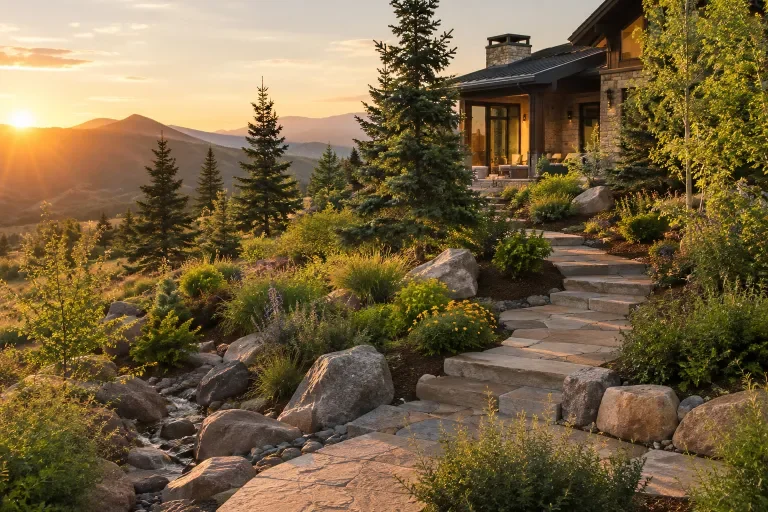
A good Park City landscape plan starts with how the land behaves in winter and spring melt, then designs paths, drainage, planting and snow storage so the yard works in all four seasons. A garden that looks lovely in July can become hard work in January if paths are too narrow to clear or a patio drains toward the house.
Observe Before You Design
Walk the property after a storm, during snowmelt and at different times of day. Map:
- Slopes, low spots, existing drainage routes and compacted ground
- Morning, midday and late sun on outdoor living areas
- Views to keep, privacy needs and windy spots
- Where snow slides off roofs and where plowed snow can go
- Vehicle and service access, utilities and soil conditions
Microclimates matter as much as elevation. A south-facing wall creates a warm pocket, while a shaded hollow holds cold air and snow longer. The USDA Plant Hardiness Zone Map is a starting point, adjusted for wind, reflected heat and soil moisture.
Manage Spring Runoff
Meltwater can erode bare soil, wash mulch onto paths, undermine edges or pool beside foundations. Plan grading, swales, permeable surfaces and stabilised areas before building patios or walls. Utah State University Extension offers guidance on drainage problems such as slow-draining planting holes. Send downspouts where water can drain away safely without freezing across a walkway.
Plant in Layers
Evergreens give winter structure and screening. Deciduous trees and shrubs add shade, autumn colour, berries and interesting bark. Perennials and grasses fill lower layers if they suit the exposure and short growing season. Group plants by water needs, leave room for mature size and snow movement, and remember that a plant happy in a sheltered bed may fail on an exposed slope.
Limit lawn to areas used for play or with a clear visual role, and use drip irrigation, mulch and lower-water planting elsewhere.
Hardscape and Lighting for Every Season
Choose path and patio surfaces for traction, drainage and freeze-thaw resistance. Routes to the front door, garage and bins must be wide and easy to clear. Keep delicate features away from snow storage and plows. Water features need access for pumps and filters and a plan for winter shutdown. Low-voltage lighting with timers should light steps and entries without glare; check fixtures each season for snow or irrigation damage.
Build It in Phases
- Site review and priorities
- Grading, drainage, utilities, irrigation and access
- Paths, stairs, patios and walls
- Soil improvement and planting
- Lighting, seating and details
- A seasonal care calendar for pruning, irrigation checks and winter prep
Budget each phase separately so the project can pause between stages without leaving the site half-finished. Following that order prevents expensive rework, such as tearing up a new patio to fix drainage that should have come first.